Independent fire pit research
Fire pits, and how to choose one without regretting it
Seven types, four fuels, one set of clearance rules that most buyers find out about after the pit is already on the deck. Start here.
FirePitSpot is reader supported. We earn a commission from qualifying purchases made through links on this site, at no extra cost to you. Read the full disclosure.
Minimum clearance for a portable outdoor fireplace under model fire code
Maximum firewood moisture the EPA recommends for a clean burn
Typical flame temperature of a wood or gas fire pit
Output that suits most mid size residential patios
Editor's picks
If you already know what you want
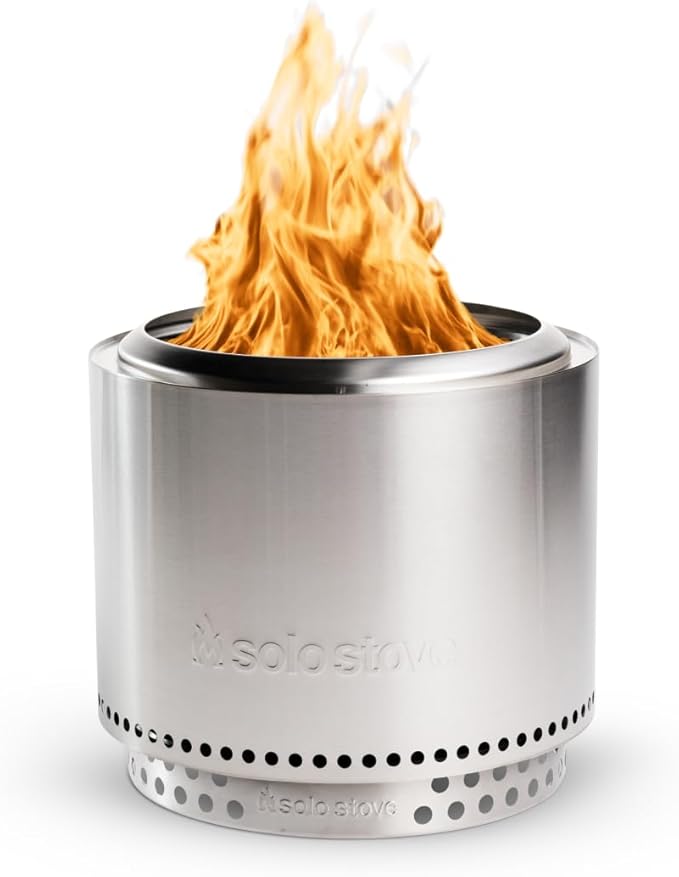
Solo Stove Bonfire 2.0
Genuine secondary combustion, light enough to move alone, removable ash pan for two minute cleanup.
Check price on Amazon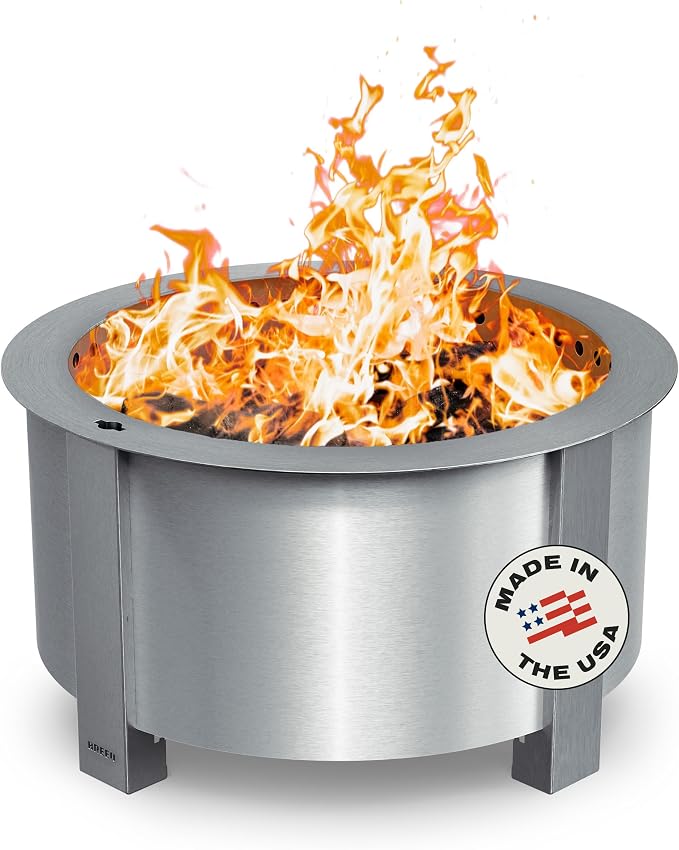
Breeo X24
Heavy gauge steel made in Pennsylvania, with a sear plate built into the rim for live fire cooking.
Check price on Amazon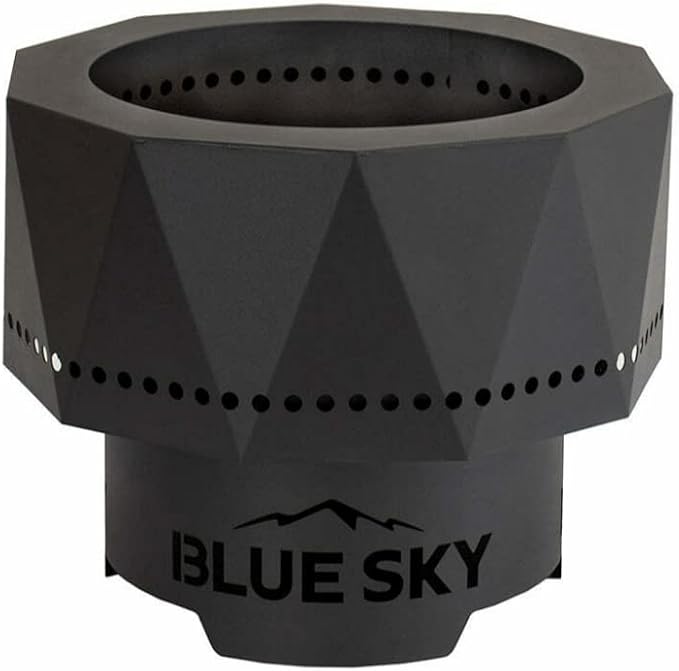
Blue Sky The Ridge
Runs wood or pellets, packs into its own base, and costs a fraction of the premium tier.
Check price on Amazon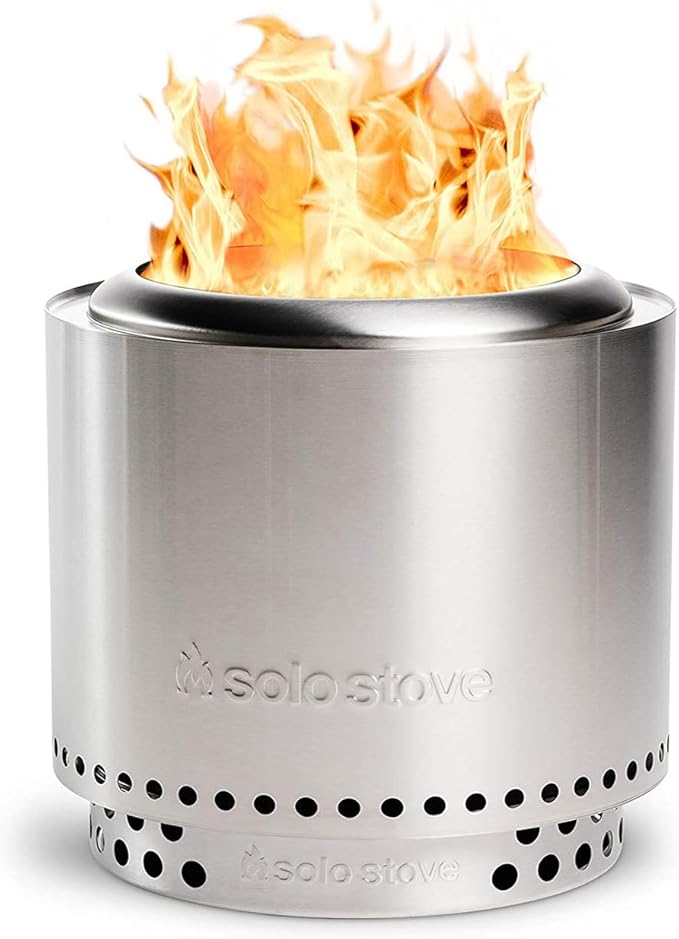
Solo Stove Ranger 2.0
Fifteen inches across. Fits a balcony, a small patio, or the back of a truck.
Check price on AmazonThe short version
- Fuel decides everything else. Wood gives you crackle and cost control. Gas gives you an instant, adjustable flame and no cleanup. Pick that first, then shop.
- Smokeless means less smoke, not no smoke. Secondary combustion only kicks in once the walls are hot, and wet wood defeats it entirely.
- Bigger BTU is not better. Output should match the square footage you are actually trying to warm.
- Clearance is a legal question, not a preference. Model code separates portable units from open recreational fires, and local ordinances often go further.
- Tabletop liquid fuel pits carry a real hazard. Flame jetting has prompted federal warnings and product recalls. Check before you buy.
A fire pit is one of the few backyard purchases where the cheap version and the expensive version look almost identical in a product photo and behave nothing alike in the yard. The differences that matter are structural: how air moves through the unit, what fuel it burns, how hot it runs, and how far it has to sit from your house before it is legal to light.
This page covers all of it, and links out to the deeper guides for each decision. Everything here is grounded in fire code text, federal air quality guidance, and product safety notices rather than manufacturer marketing.
Section oneThe seven types of fire pit
Categories overlap in marketing copy but not in practice. These are the seven things people actually mean when they say fire pit.

Open wood burning bowl
Fuel: split firewood
A single wall steel, cast iron, or stone bowl with a spark screen. Cheapest way to have a real fire. Also the smokiest, because there is no engineered airflow reburning the exhaust gases.
- Best for
- Budget, big open yards
- Weak spot
- Smoke follows you
- Typical price
- Under $300
Smokeless double wall
Fuel: split firewood or pellets
Two steel walls with an air channel between them. Intake air preheats in the cavity and shoots back into the fire through jets near the rim, reburning the smoke. Hotter, cleaner, and hungrier for dry wood.
- Best for
- Patios, decks, close neighbors
- Weak spot
- Smaller fuel capacity
- Typical price
- $200 to $600
Propane fire pit table
Fuel: 20 lb LP tank
A table with a burner in the middle and the tank hidden in the base. Push button ignition, adjustable flame, zero ash. The tank is the whole trade off: you will be swapping it.
- Best for
- Renters, entertaining, no cleanup
- Weak spot
- Tank management, fuel cost
- Typical price
- $300 to $1,200
Built in natural gas
Fuel: plumbed gas line
Permanently connected to your home gas supply. Cheapest fuel per hour by a wide margin and never runs out mid evening. It also never moves again, and it needs a licensed install.
- Best for
- Outdoor kitchens, forever homes
- Weak spot
- Install cost, permanence
- Typical price
- Unit plus line install
Gel and ethanol tabletop
Fuel: liquid or gel alcohol
Small decorative flame in a ceramic or concrete vessel. No smoke, no ash, and very little heat. This is also the category with a documented flame jetting hazard, so buy carefully.
- Best for
- Ambience on a small table
- Weak spot
- Refill hazard, low heat
- Typical price
- $40 to $200
Wood pellet pit
Fuel: compressed wood pellets
Pellets are uniform and dry, which is exactly what secondary combustion wants, so these run remarkably clean. The catch is that you are buying bagged fuel instead of stacking logs.
- Best for
- Camping, decks, clean burn
- Weak spot
- Short burn time per load
- Typical price
- $150 to $500
Chiminea and masonry
Fuel: split firewood
A front loading clay or steel chimney, or a built stone ring. The chimney directs smoke upward and away from seating, which is the main reason people still choose them.
- Best for
- Directional smoke, wind
- Weak spot
- Small firebox, cracking
- Typical price
- $150 to $900
Portable camp pit
Fuel: wood, pellets, or propane
Folding or packable units built for a truck bed. Often overlaps with the smokeless category. Watch the weight rating and whether it is legal where you are camping.
- Best for
- Campsites, tailgating, RV
- Weak spot
- Thin steel warps
- Typical price
- $100 to $400
Section twoFuel comparison
Peak flame temperature barely separates wood from gas. Everything else does.

| Fuel | Flame temp | Real heat | Cleanup | Cooks food | Runs out mid evening |
|---|---|---|---|---|---|
| Firewood | Around 1,100°F | Highest, plus a coal bed | Ash every burn | Yes | Only if you run out of logs |
| Propane | Roughly 800 to 1,200°F | High and instantly adjustable | None | Not directly | Yes, tanks empty |
| Natural gas | Roughly 800 to 1,200°F | High, and cheapest to run | None | Not directly | Never |
| Bioethanol | Around 400°F | Ambience only | None | No | Frequent refills |
Flame temperature is a poor proxy for how warm you will feel. What you actually feel is radiant output over time, which is measured in BTU per hour and covered in the next section. A bioethanol burner and a propane burner can look similar and warm you very differently.
Gas fire pits use a media bed rather than logs, and the medium matters more than most buyers expect. Tempered fire glass reflects light and hides the burner well; lava rock is cheaper, absorbs heat, and hides discoloration better over time. We break the difference down in the fire glass and lava rock comparison.
Section threeHow a smokeless fire pit actually works
This is the single most misunderstood feature in the category, and the one worth understanding before you spend three times as much.
A regular fire pit performs one burn. Wood heats, releases volatile gases, and a portion of those gases escape unburned as visible smoke. That escaping smoke is fuel you paid for and never used, which is why an open bowl feels cooler than it looks.
A double wall pit adds a second burn. Cold air is drawn in through vents at the base, travels up the cavity between the inner and outer wall, and gets superheated on the way. It is then injected back into the top of the fire through a ring of jets near the rim, where it meets the rising smoke and reignites it. That is secondary combustion, and it is the entire reason these units run hotter, use less wood, and put far less smoke in your face.
Signature diagram
Airflow through a double wall pit
Three stages
- Primary burnWood ignites in the inner chamber. Oxygen arrives through vents in the base of the fire bowl.
- PreheatCold air pulled into the base of the wall cavity climbs the gap and is superheated by the inner wall on the way up.
- Secondary burnThat superheated oxygen fires back through the jets near the rim and reignites the rising smoke before it can escape.
All three stages have to work together. A pit with two steel walls but no top injection vents is structurally double wall and thermally behaves like a single wall pit, which is why some budget units advertise the construction and deliver none of the benefit.
What defeats secondary combustion
Three things, in order of how often they ruin someone's evening. Wet wood releases more vapor than the jet ring can reburn, so the smoke comes straight back. Overloading smothers the airflow the system depends on. Cold walls mean the jets are not injecting hot air yet, which is why every smokeless pit smokes for the first few minutes and again as it dies down.
The fix is boring and effective: burn dry, split hardwood, build the fire top down so the walls heat fast, and stop feeding it before you want to leave. More on that in choosing firewood for a fire pit.
Section fourSizing by heat output
BTU per hour is the number that predicts whether you will actually feel warm. Buying too much is a real mistake, not just an expensive one.
British thermal units measure heat energy released per hour. For gas pits it is printed on the spec sheet, and it is the closest thing the category has to an honest performance figure. The instinct is to buy the biggest burner available. Resist it: an oversized burner in a small courtyard is uncomfortable to sit near, and it burns through propane at a rate you will notice.
Chart
Recommended output by patio size
Portable propane pits generally fall between 14,000 and 40,000 BTU. Permanent installations reach 50,000 to 150,000 BTU. Ranges vary by manufacturer, so treat this as a sizing frame rather than a spec.
What a tank of propane actually buys you
A standard 20 pound LP tank holds roughly 4.7 gallons. At approximately 91,500 BTU per gallon, a 50,000 BTU burner running wide open will empty it in under nine hours. Dial the flame to medium and you stretch that considerably. If you sit outside several nights a week through the season, budget for multiple tank swaps a month, which is the single biggest argument for running a gas line instead.
The full math, including how natural gas compares on cost per hour, is in the fire pit BTU guide.
Section fivePlacement, clearance, and the law
The distances below are not suggestions from a lifestyle blog. They come out of model fire code, and your local ordinance can be stricter.
Fire code draws a line most buyers have never heard of. A manufactured, contained unit is a portable outdoor fireplace. An open fire on the ground is a recreational fire. They are governed by different clearances, and the pit you bought determines which one you own.
Chart
Minimum distance from a structure or combustible material
Sources: the International Fire Code sets 15 feet for portable outdoor fireplaces, 25 feet for recreational fires, and 50 feet for bonfires. The National Fire Protection Association's educational guidance for fire pits suggests a minimum of 10 feet from anything that can burn, and notes that jurisdictions enforcing NFPA 1 may require outdoor fires to sit 50 feet from any structure. Guidance is not law; an adopted code is.
The exception that trips people up
Model code carves out an exception for portable outdoor fireplaces used at one and two family dwellings, which is why a neighbor with an identical pit can place it closer than a code table implies. That exception does not exist everywhere, and it does not override a municipal ordinance that says otherwise. Cities routinely publish their own rules, and they are easy to find:
- Minnesota State Fire Marshal, recreational fires and outdoor fireplaces
- City of San Diego, recreational fire policy
- City of Austin, recreational fire safety for single family homes
- Town of Cary, North Carolina, outdoor fire rules including property line setbacks
Note that some jurisdictions add a rule the model code does not: a minimum setback from the property line, separate from the setback from structures. Cary requires stationary outdoor fire pits to sit at least 5 feet from property lines and at least 15 feet from structures including decks. Check both numbers before you pour a patio around a pit.
The other placement rules that are not about distance
- Never under eaves, overhanging branches, or a roofline.
- On a level, non combustible surface such as pavers, brick, or concrete.
- Attended at all times until fully extinguished, which is an explicit code requirement, not advice.
- With a means of extinguishment on hand. Code language typically calls for a portable extinguisher with a minimum 4-A rating, or an approved alternative such as a garden hose, water barrel, sand, or dirt.
- Not during high wind, red flag warnings, or a local burn ban.
Decks are their own problem, and the answer is genuinely product specific. Read can you put a fire pit on a wooden deck before you assume a deck protector solves it.
Section sixBurning clean
Smoke is not just annoying. It is a measurable air quality problem, and the fix is mostly about moisture.
Wood smoke carries fine particulate matter known as PM2.5 along with a mixture of gases. The Environmental Protection Agency is direct about the health effects: breathing these fine particles can trigger asthma attacks and bronchitis and can aggravate heart and lung disease, with children, older adults, and people with asthma or heart conditions at greater risk. That is the case for burning properly rather than a reason to give up the fire.
The lever that matters most is water. Green or unseasoned wood spends the first part of every burn boiling off its own moisture instead of producing heat, which is why wet wood smokes, hisses, and feels cold. EPA guidance is specific: split, stack, cover, and store firewood for roughly six months for softwood and at least a year for hardwood, and aim for a moisture content below 20 percent. A twenty dollar moisture meter settles the question in seconds.
| Material | Verdict | Why |
|---|---|---|
| Seasoned hardwood | Burn it | Oak and hickory give long, steady heat and a coal bed that sustains secondary combustion |
| Wood pellets | Burn it | Uniform size and low moisture, which is ideal for clean reburn |
| Softwood | If dry | Pine lights fast but runs cooler, pops, and throws more sparks |
| Green or unseasoned wood | Do not | Wastes heat vaporizing water and defeats a smokeless pit entirely |
| Yard waste and leaves | Do not | Heavy smoke, and many jurisdictions class this as illegal open burning |
| Treated or painted lumber | Never | Releases harmful chemical compounds when combusted |
| Trash, plastic, cardboard | Never | Toxic emissions and flying embers |
| Accelerants and gasoline | Never | Vapor ignition is how people end up in a burn unit |
Additional reference: the California Air Resources Board woodburning handbook walks through the combustion stages in detail, and Connecticut's state environmental agency lists the specific pollutants wood smoke carries.
Section sevenSafety, and one category that deserves a warning
Flame jetting
Tabletop fire pits and tabletop fireplaces running on liquid or gel alcohol fuel have a specific failure mode called flame jetting, in which fuel vapor ignites and throws burning liquid outward. The Consumer Product Safety Commission has published direct consumer warnings telling people to stop using specific tabletop fire pit and tabletop fireplace models over flame jetting and fire hazards, citing deaths and serious burn injuries.
If you buy in this category: check the CPSC recall database for the exact model, never add fuel to a burner that is lit or still warm, and never assume the flame is out because you cannot see it. Alcohol burns with a flame that is very hard to see in daylight.
The rules that apply to every fire pit
- Attend it until it is out. Not until it looks out. Embers reignite, and gas connections can leak.
- Use a spark screen on any wood burning pit. It is the single cheapest safety upgrade you can make.
- Keep children and pets back. The NFPA suggests a minimum of three feet from the pit at all times.
- Position seating deliberately. A pit throws well over 1,000°F at the flame, and radiant heat does not care that the chair looked far enough away in daylight.
- Extinguish fully. Douse a wood fire and stir the ash, or shut the gas off at the source, before you go inside.
- Store ash safely. Ash stays hot far longer than people expect. Metal container, lid, away from the house.
For federal injury data and product safety context, the CPSC publishes its fire research and statistics and its NEISS emergency department injury data publicly. Our full breakdown lives in the fire pit safety and clearance guide.
Section eightMaterials and how they age
The pit that looks best in year one is often not the one still standing in year five.
| Material | Holds up to | Fails by | Best climate |
|---|---|---|---|
| 304 stainless steel | Rain, salt air, heat cycling | Heat discoloration, which is cosmetic | Coastal and wet |
| Corten weathering steel | Weather, by design | Rust bleed onto pavers underneath | Dry, and where you want the patina |
| Powder coated carbon steel | Impact, low cost | Rust once the coating chips | Dry, covered storage |
| Cast iron | Extreme heat, retains warmth | Rust and cracking if left uncovered | Anywhere, with a cover |
| Cast concrete | Wind, weight, freeze cycles | Hairline cracking over years | Most climates |
| Cast aluminum | Humidity and salt | Lighter units move in wind | Coastal and humid |
| Clay chiminea | Directional smoke control | Thermal cracking | Mild, frost free |
The material conversation ends in the same place regardless of what you buy: a cover. Water sitting in a bowl through a freeze cycle destroys more fire pits than fire ever does. See fire pit maintenance and rust prevention.
Section nineThe accessories that are actually worth it
Most fire pit accessories are decorative. Four of them change how the pit performs.
- A weatherproof cover. The highest return purchase in the entire category, and the one most people skip.
- A spark screen. Non negotiable on wood, and often sold separately even on premium units.
- A moisture meter. Twenty dollars, and it is the difference between a clean burn and a smoky one every single night you use the pit.
- A stand or heat shield. Protects pavers, deck boards, and grass from the underside of the bowl, which gets far hotter than buyers expect.
Cooking grates, rotisseries, and lids are worth it only if you will actually cook. Our tested picks are in the fire pit accessories guide and the fire pit cooking guide.
Section tenEvery guide on this site
Start with the decision you have not made yet.
Section elevenFrequently asked questions
How far does a fire pit need to be from a house?
It depends on which kind of fire you have. Model fire code keeps a portable outdoor fireplace at least 15 feet from a structure or combustible material, an open recreational fire at least 25 feet away, and a bonfire at least 50 feet away. NFPA educational guidance suggests a minimum of 10 feet from anything that can burn for a fire pit specifically. Local ordinances are frequently stricter, and some add a separate setback from the property line, so the number that governs you is the one your city or county publishes.
Are smokeless fire pits actually smokeless?
No. They are dramatically lower smoke, not smoke free. Secondary combustion only runs once the walls are hot, so you get smoke at startup and again during burnout. Wet or resinous wood brings the smoke back at any point in the burn, no matter what the pit cost.
How many BTUs do I need?
Match output to the space instead of buying the biggest burner. Roughly 30,000 to 50,000 BTU suits a small patio near 150 square feet, 50,000 to 70,000 BTU suits a mid size patio near 250 square feet, and open or windy areas benefit from 90,000 BTU or more. Portable propane pits typically run 14,000 to 40,000 BTU, while permanent installations reach 50,000 to 150,000 BTU.
Can you put a fire pit on a wooden deck?
Only with a unit listed for that use, a proper heat barrier underneath, and a local code that permits it. Many jurisdictions restrict open flame devices on combustible decks and balconies. A gas fire table certified to ANSI Z21.97 plus a purpose built deck protector is the common path, but the manufacturer instructions and your local fire marshal both have to agree before you light it.
What wood should you burn in a fire pit?
Dry, seasoned hardwood, split and stored under cover. The EPA recommends firewood below 20 percent moisture content, seasoned around six months for softwood and a year or more for hardwood. Never burn treated lumber, plywood, painted wood, trash, or plastic.
Is wood smoke from a fire pit bad for you?
Wood smoke contains fine particulate matter, PM2.5, along with a mixture of gases. The EPA notes that breathing these fine particles can trigger asthma attacks and bronchitis and can aggravate heart and lung disease, with children, older adults, and people with asthma or heart conditions at greater risk. Burning dry wood in a hot, well fed fire and sitting upwind of the smoke both reduce exposure.
Are tabletop ethanol and gel fire pits safe?
This category carries a documented flame jetting hazard, where fuel vapor ignites and throws burning liquid outward. The CPSC has issued public warnings telling consumers to stop using specific tabletop fire pit and tabletop fireplace models over flame jetting and fire hazards, citing deaths and serious burn injuries. Check the recall database for the exact model, never refill a burner that is lit or warm, and treat pourable liquid fuel with real caution.
Do you need a permit for a fire pit?
Usually not for a contained portable unit at a single family home, which most codes do not classify as open burning. Bonfires, larger open fires, and yard waste burning commonly do require a permit, and some cities require one for any outdoor fire. Burn bans override all of it. Call your local fire department, since the answer is a two minute question for them.
Affiliate disclosure
FirePitSpot is a participant in the Amazon Services LLC Associates Program, an affiliate advertising program designed to provide a means for sites to earn advertising fees by advertising and linking to Amazon.com. As an Amazon Associate, we earn from qualifying purchases.
Some links on this site are affiliate links. If you click one and make a purchase, we may receive a commission at no additional cost to you. This does not influence which products we recommend or how we rank them. We do not accept payment for placement, and a product cannot buy its way into a guide.
Prices and availability shown on merchant sites are accurate at the time of publication and are subject to change. Read our full affiliate disclosure and our editorial policy.
How we research
Recommendations on this site start from primary sources rather than press releases. Clearance figures come from published fire code and from state and municipal fire authorities. Air quality and firewood guidance comes from the Environmental Protection Agency. Product safety claims are checked against Consumer Product Safety Commission notices and the federal recall database.
Where a specification is manufacturer reported, such as BTU output, we say so, because that figure describes the burner at full output and not the way most people actually run it. Learn more about how we test and who we are.